If you’ve noticed more brands quietly switching to sustainable glass packaging in India and beyond over the last couple of years, you’re not imagining it.From beverage startups to skincare labels, packaging decisions are being driven less by cost alone and more by a simple question: what does this material say about us?
For manufacturers and buyers alike, that question is reshaping sourcing decisions across the industry — and it’s worth understanding why, and what it actually means if you’re the one placing the order.
The Shift Away from Single-Use Plastic
Plastic packaging has had a rough few years in the public eye. Regulatory pressure has tightened in multiple markets, with several countries restricting single-use plastics outright or taxing them more heavily. At the same time, consumers — particularly younger ones — are actively scrutinizing the packaging a product comes in, not just the product itself.
This isn’t a fringe concern anymore. It shows up in:
- Retailer requirements for sustainable packaging certifications
- Consumer surveys ranking “eco-friendly packaging” as a purchase factor
- Brand audits where packaging materials are now part of ESG reporting
For a brand owner, this means packaging has quietly become a marketing decision as much as a logistics one. And for manufacturers, it means demand is shifting toward materials that can credibly back up a sustainability claim — not just look the part.
Why Sustainable Glass Packaging Wins
Glass has a few inherent advantages that plastic simply can’t match, regardless of how the plastic is marketed:
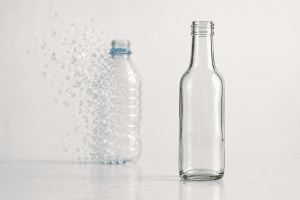
It’s infinitely recyclable. Unlike most plastics, which degrade in quality each time they’re recycled (and often end up downcycled into lower-grade products), glass can be melted down and reformed indefinitely without losing strength or clarity. A glass bottle can theoretically be recycled into another glass bottle forever.
No microplastic concerns. Growing research into microplastic contamination — in food, water, and packaging — has made plastic a harder material to defend, especially for food and beverage brands. Glass carries no equivalent risk.
Sustainable glass packaging doesn’t interact with what’s inside it, which matters for brands in food, beverage, and cosmetics where taste, purity, or shelf life are selling points.
Perceived value. This one is less about science and more about psychology — but it matters commercially. Glass packaging is consistently associated with premium quality, even when the product inside is identical to a plastic-packaged version. Brands repositioning toward a premium or “clean” image often switch to glass specifically for this perception shift.
Addressing the Cost Question Honestly
The most common pushback brands raise is straightforward: isn’t glass more expensive than plastic?
It’s a fair question, and the honest answer is: usually, yes — on a pure per-unit basis. Glass is heavier, which affects shipping costs, and the raw production process differs from plastic injection molding.
But the comparison looks different when you account for the full picture:
- Reduced return/complaint costs from concerns over chemical leaching or plastic taste
- Marketing value — brands often message glass packaging directly in campaigns, effectively turning a packaging cost into a marketing asset
- Regulatory risk avoidance — as plastic restrictions tighten in various markets, switching ahead of mandatory changes avoids a forced, rushed transition later
- MOQ flexibility — many manufacturers (including custom mold makers) now offer more accessible minimum order quantities than they did five years ago, narrowing the cost gap for smaller brands
The honest takeaway: glass isn’t always the cheaper choice upfront, but for brands building around quality, trust, or sustainability positioning, it’s often the more strategically sound one.
What This Means If You’re Sourcing Packaging Today
If your brand is considering this shift, a few things are worth checking before you commit to a supplier:
- Customization capability — can they handle your specific bottle/jar shape, embossing, or branding requirements, or only standard stock molds?
- MOQ transparency — get a clear minimum order quantity upfront; vague answers here usually mean inflexibility later.
- Lead time clarity — sampling, mold development, and full production all take time. A manufacturer who can’t give you a realistic timeline is a red flag.
- Export experience — if you’re an international buyer, ask directly about their experience shipping glass packaging abroad, including how they handle breakage risk in transit.
Where Glastic Global Fits Into This Shift
If you’ve noticed more brands quietly switching to sustainable glass packaging in India and beyond over the last couple of years, you’re not imagining it.
We’ve been manufacturing glass bottles, jars, tumblers, and drinkware out of Firozabad — India’s glass manufacturing hub — for years, and this shift toward sustainable packaging isn’t new to us; it’s the direction the industry was always going to move in.
What that means practically for brands working with us:
- Custom mold development for bottles, jars, and tumblers, with flexible MOQs that scale with your order size
- Both blown and pressed glass-making techniques, depending on what your product needs
- Branding options including embossing, logos, and custom artwork
- Packaging support — thermal, corrugated, cardboard, and carry-case options for safe transit
If you’re rethinking your packaging strategy around sustainability, it’s worth a conversation before you finalize a supplier — even just to compare what’s realistic for your order size and timeline.
Get in touch with our team to discuss your packaging requirements → [email protected]
